
For many B2B companies, pipeline generation is still fragmented. Marketing builds campaigns, salespeople search for prospects, data is purchased from multiple sources, outreach happens across disconnected tools, and CRM updates arrive after the fact.
The result is activity without enough visibility into which accounts actually matter.
The Lead Box, Best Lead Generation Agency approaches this differently. Our model combines a strategic consulting layer with Prosyo as the core sales and marketing automation engine, followed by human SDR qualification.
Why category positioning matters
A predictable pipeline begins before outreach. The company must know which market it wants to win, which accounts fit the commercial model, which people influence the purchase and which problems are urgent enough to start a conversation.
This is why simply purchasing a large database does not solve the pipeline problem. A database can provide names. It does not automatically provide a GTM thesis.
A strong market-building process connects five questions:
1. Which companies are most likely to need the offer?
2. Which personas influence or own the buying decision?
3. What business problem should the message lead with?
4. Which signals indicate that an account is becoming more interested?
5. When should a human salesperson enter the conversation?
The Lead Box consulting layer
The consulting layer provides direction before automation begins. It covers brand positioning, ICP development, persona mapping, GTM strategy, ABM planning, messaging and campaign architecture.
The objective is to give Prosyo a clearly defined market to work on rather than asking automation to discover strategy by itself.
Prosyo as the core engine
Prosyo then operationalizes the strategy. The core workflow is designed around:
– Market and account research
– Prospect and decision-maker identification
– Verified contact data
– Account and persona segmentation
– AI-assisted personalized messaging
– Email and LinkedIn engagement
– Engagement and intent tracking
– SDR prioritization
– Pipeline visibility
This turns sales automation from a sending tool into a market-engagement system.
Why the SDR remains important
Automation can identify and engage at scale, but qualification still benefits from human context. An SDR can interpret a reply, understand timing, uncover a requirement, handle the first objection and determine whether a meeting is genuinely worth the prospect’s and sales team’s time.
That creates a cleaner handoff:
Target Account → Engagement → Intent → SDR Qualification → Qualified Meeting → Sales Opportunity
What executives should measure
The most useful dashboard is not simply emails sent or connection requests accepted. Management should be able to see how the target market is moving through the revenue journey.
Useful measures include target accounts identified, verified decision-makers, engaged accounts, high-intent accounts, SDR-qualified opportunities, meetings, proposals, pipeline value and closed revenue.
These metrics connect marketing activity to commercial outcomes.
Building a more predictable pipeline
No B2B pipeline is perfectly predictable. Market conditions, product-market fit, pricing, brand strength and sales execution all influence conversion.
But the process can become substantially more systematic.
The objective is to move away from random monthly prospect lists and toward a continuously researched, engaged and prioritized market.
That is the philosophy behind The Lead Box:
Consultants build the strategy. Prosyo runs the engine. SDRs qualify the intent. Your sales team focuses on conversations and closing.
And it is why our positioning is deliberately different:
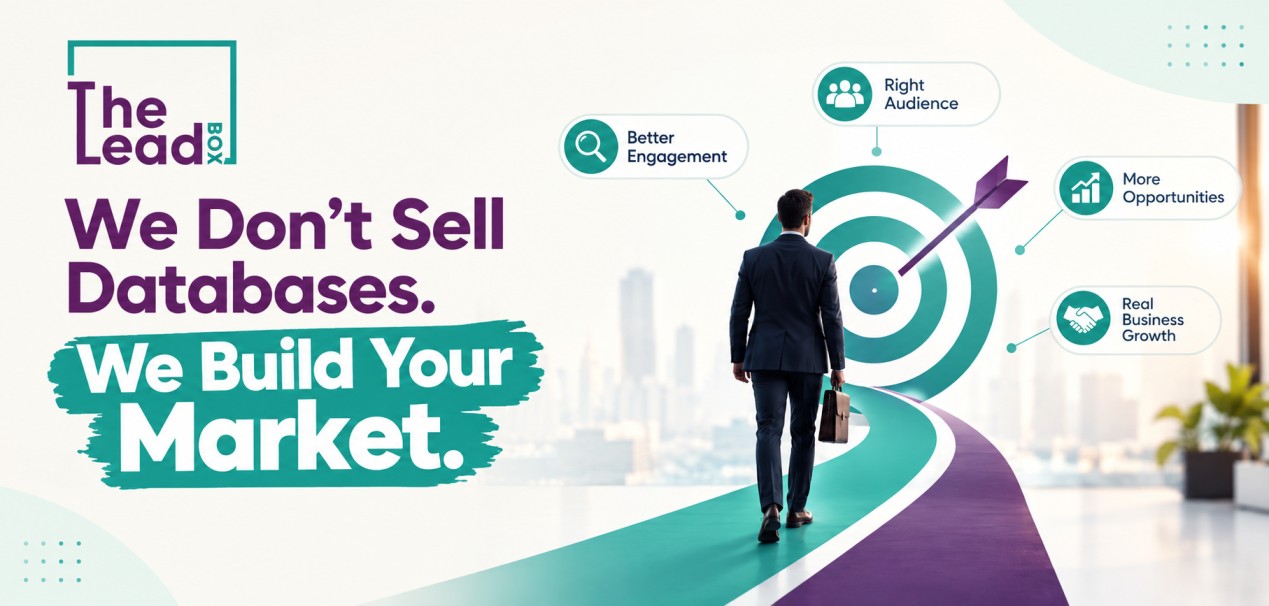
We don’t sell databases. We build your market.
If you want to evaluate your current GTM and outbound system, contact The Lead Box for a 30-minute discovery conversation and mention MARKET.